ServicesCommercial Roofing
Commercial Roofing in Fuquay-Varina
We repair and replace flat and low-slope roofs on existing small commercial buildings: storefronts, offices, churches and warehouses. We walk the roof, photograph what we find and tell you straight whether it needs a patch or a new system. Work gets scheduled around your open hours.
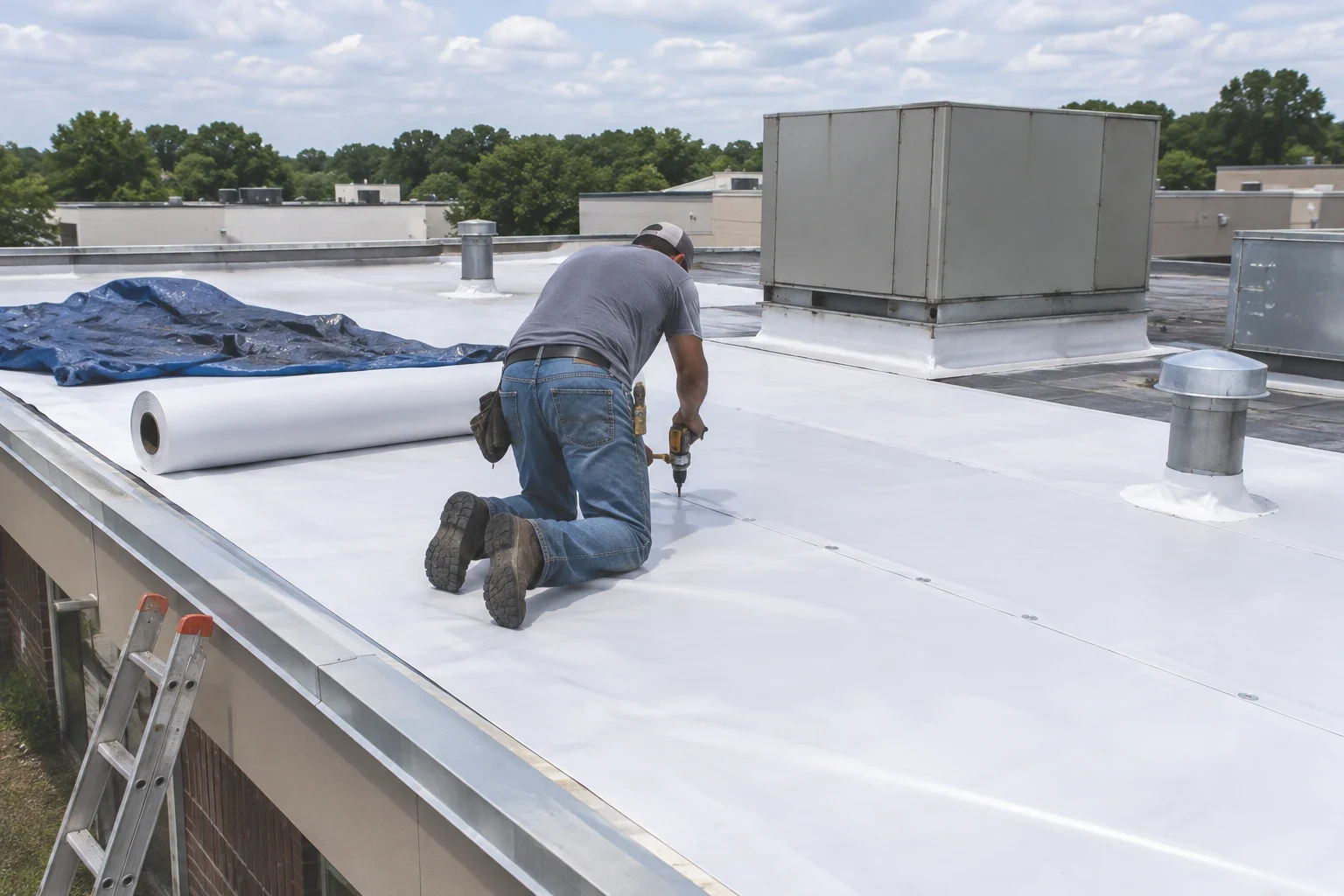
Roof Work for the Building You Already Own
Most commercial roofs we see are low-slope. Around here that usually means TPO, EPDM rubber, modified bitumen or a metal panel roof. They don't all break down the same way. Seams on TPO and EPDM start to separate. Mod bit bubbles up and cracks after years of hot sun. On metal, the fasteners work loose and rust forms where panels overlap.
Our focus is the roof on a building that is already standing. We find the leak, fix what failed and replace the membrane when patching stops paying off.
We treat a business owner the way we would treat the shop owner next door. You get a clear answer, a plan that keeps your doors open and a crew that leaves the lot cleaner than they found it.
What Our Commercial Roofing Work Covers
- Leak tracing
- Water on a flat roof often travels before it drips. We trace it back to the real source, which is usually a seam, a curb flashing or a drain, not the spot above the stained ceiling tile.
- Membrane and seam repair
- We clean, prime and patch TPO and EPDM seams and punctures. On modified bitumen we cut out blisters and lay in new plies so the repair bonds to sound material.
- Flashing, curbs and penetrations
- Leaks tend to begin where something breaks through the roof: HVAC units, vent pipes, skylights and the base of parapets. We seal those spots again or build new flashing so water can't find a path inside.
- Drains and ponding
- Standing water that sits more than a couple of days wears a membrane out early. We clear scuppers and drains and look at whether tapered insulation can move water off the roof.
- Full replacement
- When the membrane is worn through or the insulation underneath is soaked, we tear off and install a new system. We explain the options for your building and what each one costs to keep up.
Signs Your Commercial Roof Needs Attention
Stained ceiling tiles
Brown rings on drop ceilings mean water is already getting through. The longer it runs, the more insulation and decking it ruins.
Water still standing days later
After summer thunderstorms, a flat roof should drain within a day or two. Puddles that linger point to sagging deck, clogged drains or crushed insulation.
Open seams or bubbles
Seams lifting at the edges or blisters you can press down are signs the membrane is losing its bond.
Loose or rusted metal panels
Backed-out screws, worn washers and rust at panel laps all let water in. Catching them early keeps a repair small.
Spots that give under your boots
A roof that sinks a little when you step on it usually has soaked insulation or a damp deck underneath. At that point we are talking about more than a patch.
What Sets the Price of Commercial Roof Work
No two commercial roofs price the same. Patching one seam on a small office is a very different job from tearing off a warehouse roof. After the inspection, your written estimate shows where each dollar goes.
Roof size and access
Square footage drives material and labor. A tight lot, tall walls or no roof hatch can mean extra equipment to get the crew and materials up safely.
Membrane type
TPO, EPDM, modified bitumen and metal each carry different material and install costs.
What is under the membrane
Wet insulation or rotted decking has to come out before anything new goes down. A core sample during the inspection shows us how far the damage runs.
Units, vents and skylights
Anything that pokes through the roof gets flashed by hand, one piece at a time. The more equipment sitting up there, the more hours that detail work takes.
Recover or tear-off
Some roofs can take a new membrane laid over the old one, which saves on removal. Others hold too much water or already have two layers, so they have to come off.
How a Commercial Roof Job Runs
- 1
Phone call and roof walk
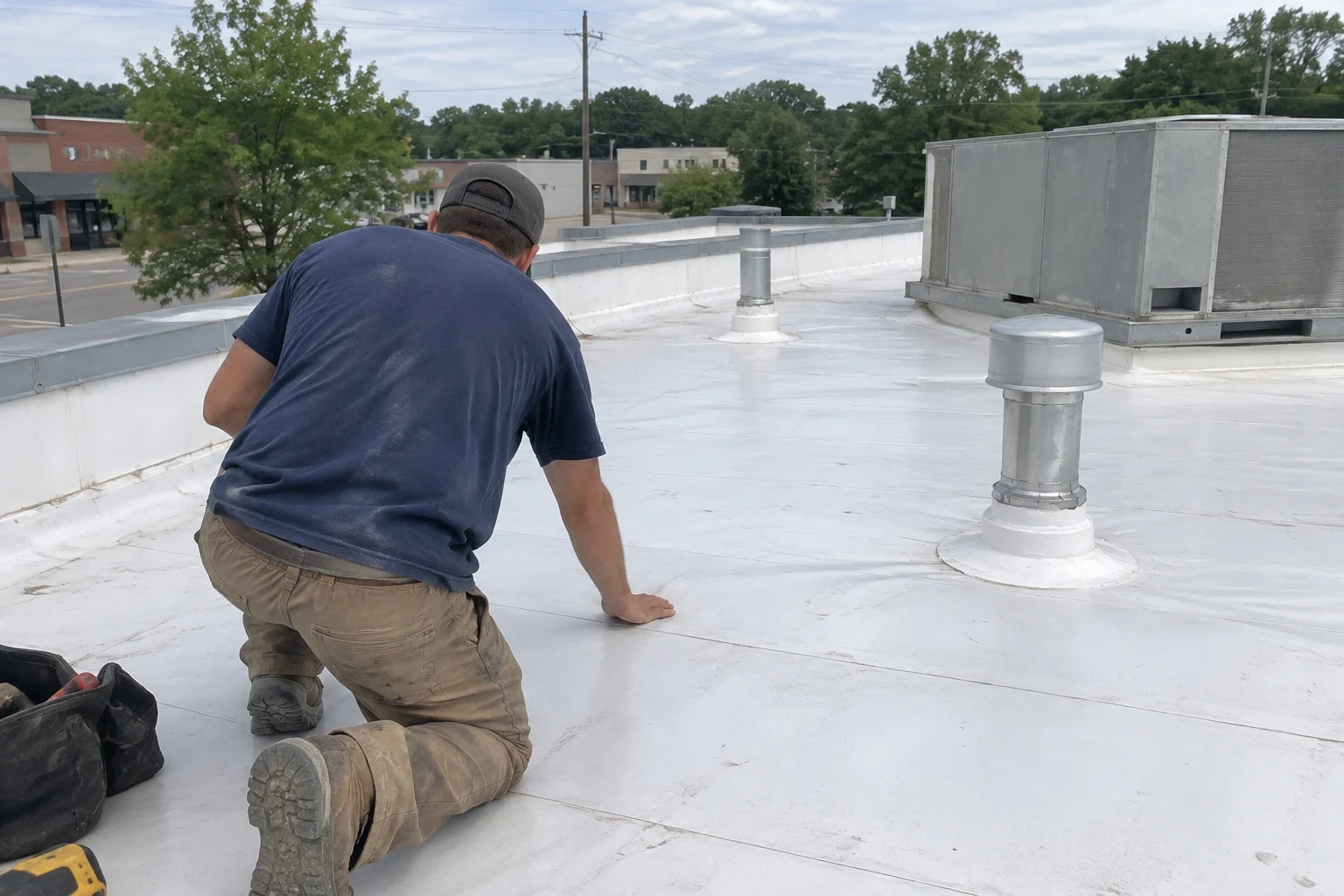
You call, we set a time and walk the roof. Inside, we look at where the leaks show up so we can match them to what is overhead.
- 2
Photo report
You get photos of what we found with a plain explanation of each problem. We tell you what can wait and what cannot.
- 3
Written estimate and schedule
The estimate lists the work line by line. We plan noisy tear-off and material drops for times that keep your customers and staff out of the way, and we pull the permit when the job calls for one.
- 4
The work and cleanup
We keep the parking lot and entrances clear and pick up debris each day. Before we leave, we walk the roof with you and show you the finished work.
Commercial Roofing Questions
Can you work while my business stays open?
Usually, yes. We stage materials away from entrances and plan the loudest work for slower hours or days you are closed. If a part of the building needs to be cleared for a few hours, we tell you ahead of time.
Should I repair or replace my flat roof?
If the membrane is sound and the problems are a few seams or flashings, a repair makes sense. If the insulation is wet across large areas or leaks keep coming back in new spots, replacement usually costs less over time. Our photo report shows you what we based that call on.
Do you help with insurance claims on commercial buildings?
Yes. We offer adjuster meetings and help through the insurance claim process. We document the damage with photos and meet the adjuster on the roof, but the coverage decision stays between you and your insurer.
Is financing available for a commercial roof?
Yes. Financing is available through Acorn Finance. Ask about it when you call and we can talk it over once you have your estimate in hand.
Which towns do you serve for commercial work?
We work in Fuquay-Varina and nearby towns including Holly Springs, Apex, Garner and Angier. The Service Areas page lists the rest.
Have Us Look Over Your Building's Roof
We go up, take pictures of every problem spot and explain what the roof needs in plain terms. Nothing gets scheduled until you give the go-ahead.