ServicesSiding
Siding Repair and Replacement in Fuquay-Varina
Cracked panels, loose boards and soft spots by the roofline usually mean water is getting behind your siding. We find where it starts, show you photos of what we see and fix the cause along with the panel. Then we clean up like it was our own yard.
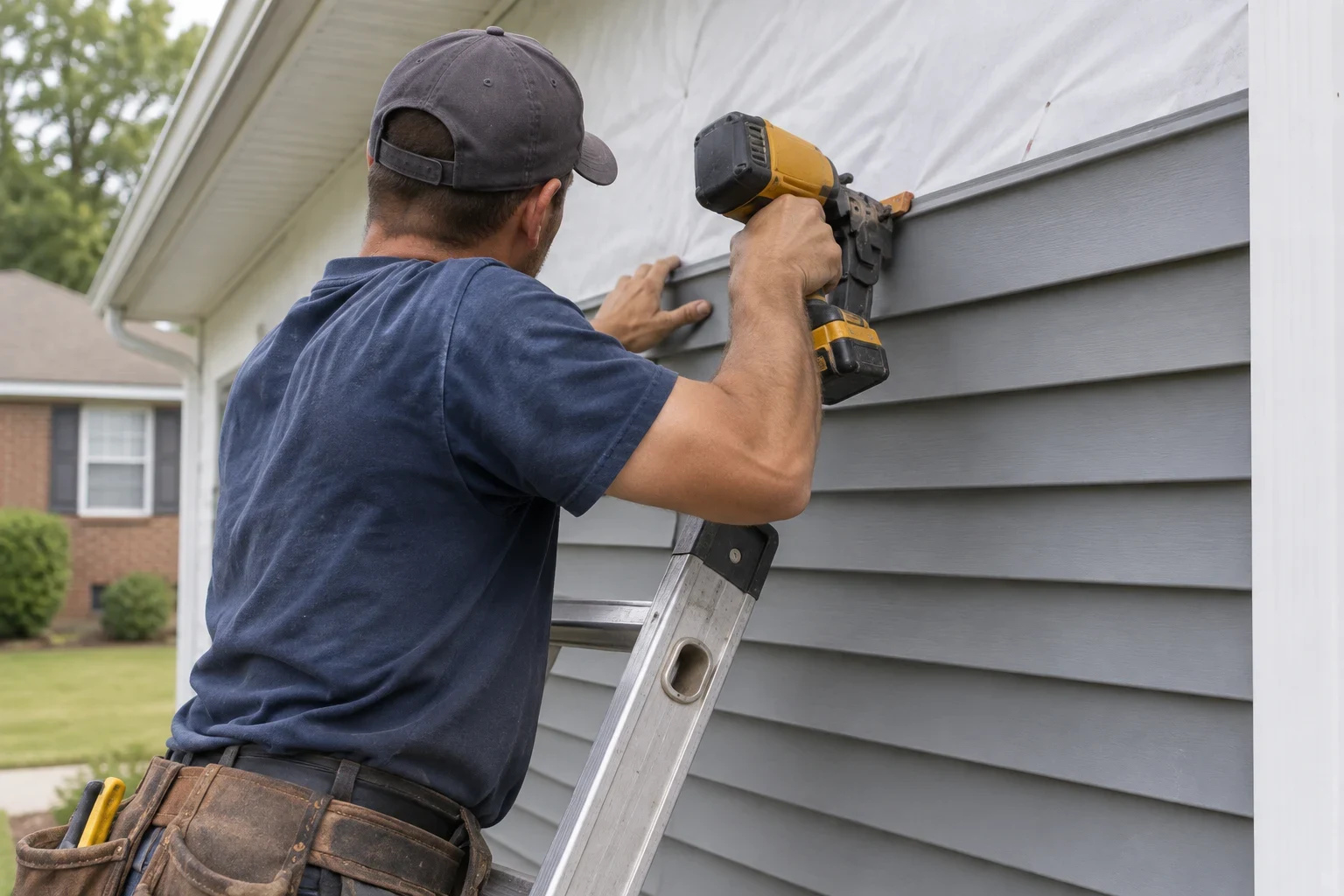
Siding Is the Wall's Raincoat
Siding sheds rain. The house wrap and flashing behind it are what stop the water that gets past. When a panel cracks or a seam opens, the siding itself is rarely the whole problem. The real damage is often the wet sheathing you can't see.
We work on siding the same way we work on roofs. Look first, open up only what we need to, and tell you straight whether a repair will hold or the wall is due for new siding. A lot of siding trouble starts where a roof meets a wall, so it helps that we know both sides of that joint.
Most of the siding we see around Fuquay-Varina and towns like Holly Springs and Angier is vinyl or fiber cement. We repair and replace both.
The Work That Goes Into Your Siding
- Fixing damaged panels and boards
- Vinyl that's cracked, warped or dented by hail comes out, and so do split fiber cement boards. We hunt down the closest profile and color we can get and let you see the match before we hang it.
- New siding when patching won't do
- If a wall or the whole house is too far gone, we strip the old siding first. That way we can check the wood underneath before any new vinyl or fiber cement goes up. We explain how each material wears so you can choose.
- Sheathing and house wrap
- Once the walls are open, any soft or rotted sheathing gets cut out and replaced. Then fresh house wrap goes on, overlapped top over bottom so water drains down and away. It's the layer doing the real work of keeping your walls dry.
- Kickout flashing where roof meets wall
- Many homes were built without kickout flashing at the bottom of a roof edge that runs into a wall. Without it, roof runoff pours right behind the siding. We install or repair it as part of the job.
- Trim, soffit and fascia
- Broken corner trim, J-channel, soffit and fascia get replaced so every edge closes up tight. Gaps in the soffit are an open door for wasps and squirrels.
Signs Your Siding Needs Attention
Cracks, holes or dents
Hail, a stray rock from the mower or a hard freeze can crack vinyl. Any opening lets wind-driven rain reach the wall.
Warped or buckled panels
Vinyl that waves or bulges was often nailed too tight. It can't move with the heat, and the seams start to pull apart.
Soft or swollen spots
Push gently near the bottom of a wall or under a window. If the board gives or the paint on the trim is bubbling, there is likely moisture behind it.
Stains below the roofline
Dark streaks running down a wall from a roof edge often point to missing kickout flashing. In our humid summers, that wet spot can grow mold quickly.
Loose or missing pieces after a storm
Strong gusts can pop panels off their locks. Even one missing piece leaves bare wrap exposed to sun and rain.
Damp or peeling walls inside
Water stains on an inside wall that has no plumbing are a common sign the leak is coming through the siding.
Where Siding Costs Come From
No two siding estimates look alike, because each one is built from what we see on your walls. The biggest unknown is usually the wood behind the panels, and nobody can be sure of that until a section is opened up. So our estimates list every item, and we call you before any extra work starts.
Repair or full replacement
Swapping a few damaged panels costs far less than residing a wall. Replacement makes sense when damage is spread out or the material is near the end of its life.
Vinyl or fiber cement
Vinyl is lighter and quicker to put up. Fiber cement is heavier, takes more labor to cut and hang, and costs more, but it stands up better to impact.
Condition of the sheathing
Rotted wood behind the siding has to come out before new siding goes on. The more water damage, the more material and time it takes.
Height and access
Two-story walls, steep yards and walls behind decks or heavy landscaping take more setup and staging.
Trim and flashing details
Lots of corners, windows and roof-to-wall joints mean more trim pieces and flashing to fit.
How a Siding Job Goes
- 1
We look and take pictures
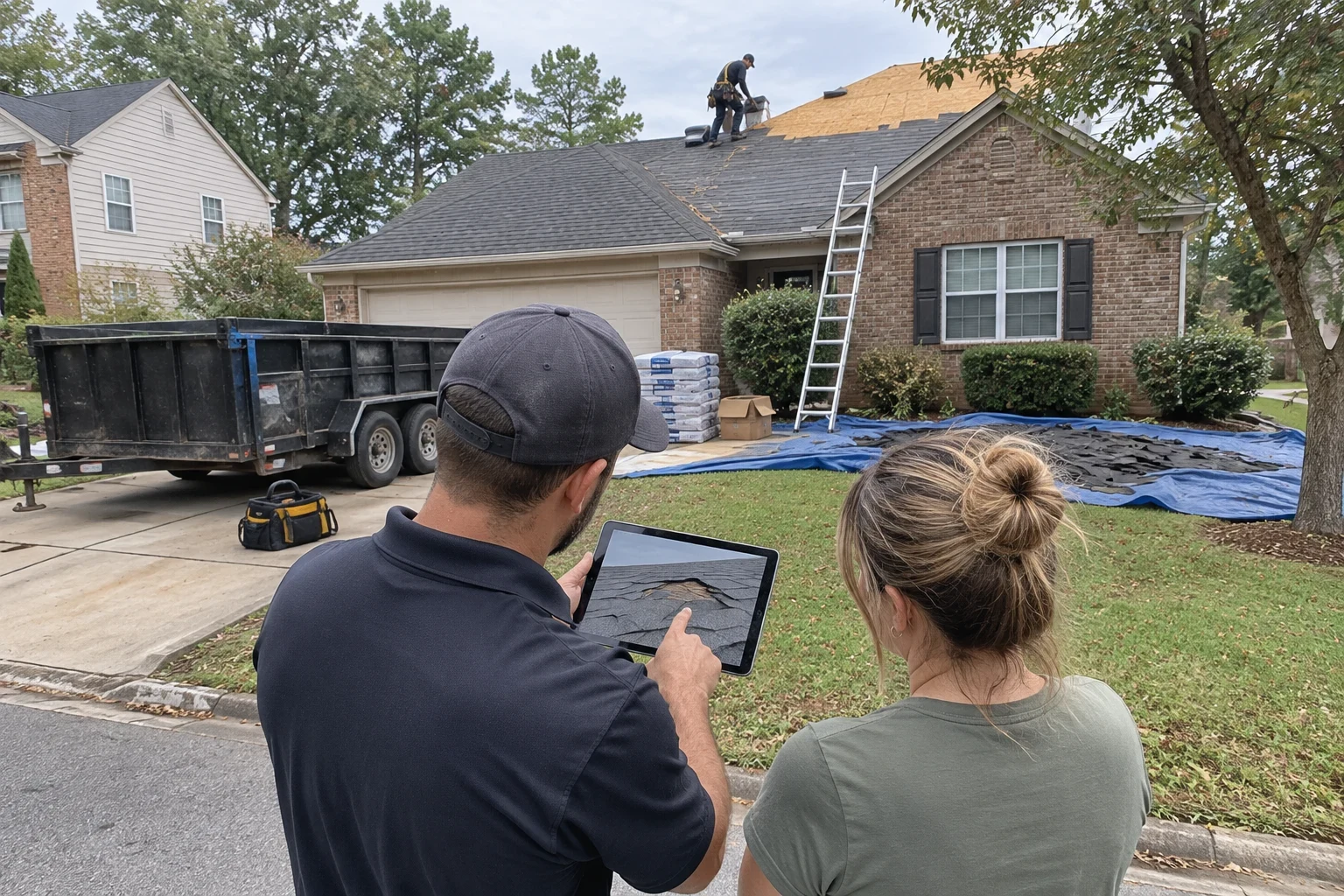
We walk every wall, check the flashing and trim and probe any soft spots. You get a photo report showing what we found and where.
- 2
You get a plain answer
We tell you whether a repair will last or the wall needs new siding, and give you a written estimate with each item listed. No pressure to decide that day.
- 3
Prep and protect
On work day we cover plants and lay tarps along the walls we're working on. We let you know which doors and spots to keep clear.
- 4
Fix what's behind it, then side it
We pull the damaged siding, replace any rotted sheathing, put in new wrap and flashing, then install the new panels or boards. If we find something we didn't expect, we show you before we go further.
- 5
Clean up and walk through
Scraps get bagged and hauled off, and we sweep the grass and beds with a magnetic roller to catch stray nails. Before we leave, you and I go around the house together so you can see the finished work.
Common Siding Questions
Can you match the siding I already have?
Often, yes. We bring samples out and hold them against your wall so you can compare the profile and color in daylight. Vinyl fades after years of sun, so a perfect match isn't always made anymore. If a new piece would stick out, we'll tell you and talk through options, like moving some original panels to the front of the house and putting the new ones on a side wall.
Does homeowners insurance cover siding damaged by hail or wind?
That comes down to your policy and what the storm actually did to your walls. We photograph every dent, crack and loose panel, and we can be there when your adjuster comes out and help you through the claim. The adjuster makes the coverage call, but we see to it that nothing we found gets missed.
Do I need new siding or just a repair?
When the damage sits in one spot and the wood behind it is dry, a repair is usually enough. When panels are brittle all over, or we find wet sheathing on more than one wall, new siding is the smarter spend. Either way, we'll show you the photos so you can see why.
Is financing available for siding work?
Yes. Financing is available through Acorn Finance. We'll walk you through how it works when we sit down with your estimate.
Should you look at the roof while you're here for the siding?
It's worth it, because plenty of wall leaks begin up at the roof edge. Just ask and we'll check both on the same trip. For a closer look at the roof on its own, our Roof Inspections page explains what that visit covers.
Let's Take a Look at Your Walls
We'll come out, check your siding and the flashing behind it, and send you photos of what we find. It's free, and you decide what happens next.