ServicesRoof Replacement
Roof Replacement in Fuquay-Varina
When repairs stop making sense, we take your old roof down to the deck, fix the wood underneath and put on a new roof that sheds water the way it should. It starts with a free inspection and a photo report, so you see what we see.
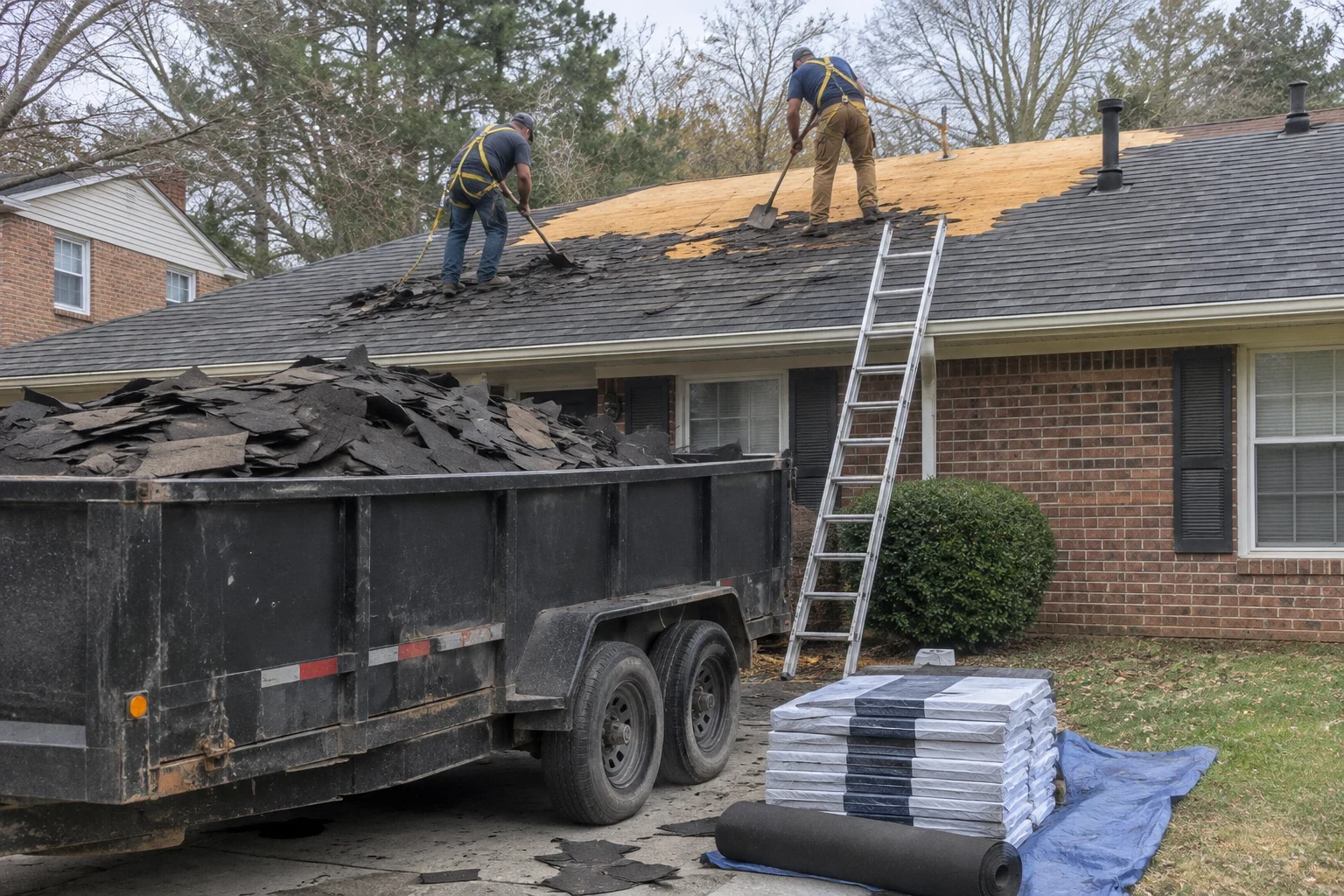
When a new roof is the right call
A roof replacement means pulling off every layer of shingles and underlayment, looking over the decking, and building a new roof starting at the drip edge. It is a much bigger job than roof repair. We only suggest it when patching would cost you more over the next few years than doing it once and doing it right.
Long, hot summers cook asphalt shingles and dry out the oils that keep them bendable. When the granules are gone and the shingles crack and curl, each summer thunderstorm finds a fresh path inside. From there, patching one leak just sends water to the next weak spot.
We give you an honest read on where your roof stands. When a fix will hold for years, you will hear that from us. Keeping you as a neighbor matters more to us than selling a roof you can do without.
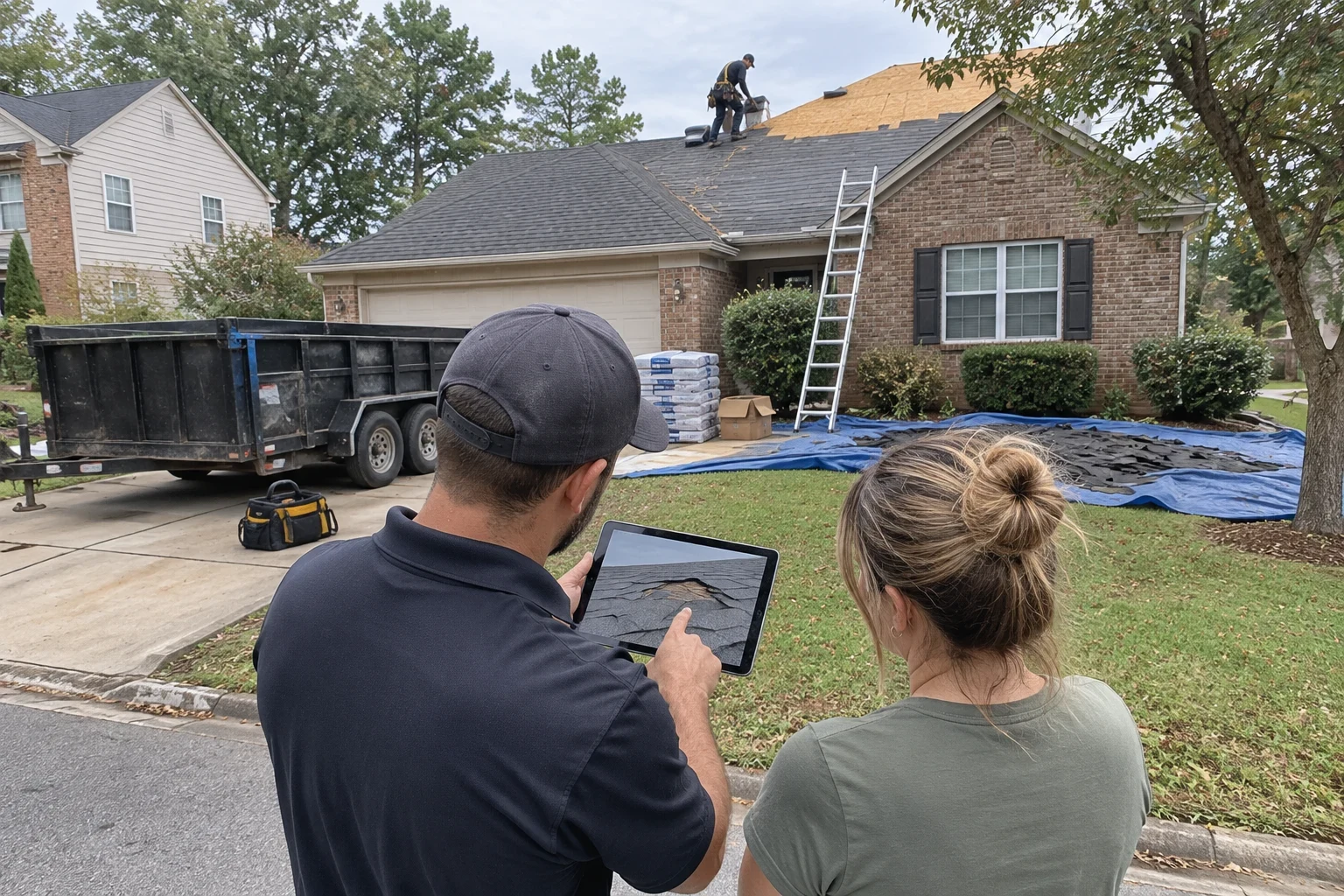
What your new roof includes
- 01
Full tear-off
Old shingles, old underlayment and old nails all come off until we reach bare wood. New shingles laid over old ones hide rot and wear out sooner.
- 02
Decking check and wood replacement
We go over every sheet of decking and flag anything soft or rotted. You get photos of the damaged wood before we replace it, and we never roof over it.
- 03
Underlayment and leak barrier
Synthetic underlayment goes over the whole deck. The eaves, valleys and areas around chimneys and pipes get a self-sealing leak barrier, since those are the first places water tends to find.
- 04
New flashing and pipe boots
Sun-cracked rubber pipe boots are behind a lot of leaks. We install new boots, step flashing and drip edge rather than reusing worn metal.
- 05
Attic ventilation
Soffit intake and a ridge vent give hot attic air a way out. A roof with good airflow stays cooler in summer and ages slower.
- 06
Cleanup and nail sweep
Tarps go over your shrubs and flower beds before we start. Every load of debris leaves with us, and we drag a magnetic sweeper across the lawn and driveway to pick up loose nails.
Questions about Roof Replacement?
Call(919) 439-2316Signs your roof is ready to be replaced
Curled or cracked shingles
Lifted or split edges mean the shingles have gone brittle. Wind gets under them and rain follows.
Granules in the gutters
Some grit right after a new install is normal. Piles of it off an older roof mean the shingles are worn thin.
Water stains in several rooms
One drip can often be fixed. When stains show up in two or three rooms, the whole roof is usually wearing out.
Soft spots or sagging
A spongy feel underfoot or a ridge line that dips usually means the wood below has been taking on water for a long while.
Trouble showing up in the attic
Look up there with a flashlight. Soggy insulation, stained rafters or pinholes of sunlight coming through the boards all point to a roof that is letting water in.
The original roof on an older house
Plenty of homes built in the 1990s and early 2000s still have their first roof. If yours does, have it checked before the next storm season.
How the job goes, start to finish
- 1
Free inspection and photo report
We get up on the roof and into the attic if there is access. You get pictures of what we found and a straight answer on repair versus replacement.
- 2
Written estimate and permit
The estimate lists materials, labor, disposal and how we price any rotten decking. Once you say go, we pull the permit and pick a start date with the forecast in mind.
- 3
Strip and cover as we go
The crew opens up a small part of the roof, then lays underlayment on it before moving to the next. By the end of each day, every bit of bare wood is sealed up, so your home stays dry overnight.
- 4
Install and final check
Shingles, flashing, vents and ridge cap go on. Then we go over the whole roof ourselves, look hard at every pipe and wall joint, and book the permit inspection.
- 5
Cleanup and walkthrough
After the yard is swept for nails, we walk around the house with you and share photos of the spots you can't see from the ground.
What sets the price of a new roof
Every roof gets its own number. Square footage and pitch give us a starting point. The rest depends on what we find under the shingles and which materials you pick. Your written estimate puts each part on its own line, so you can see where the money goes. There is also financing available through Acorn Finance if paying over time works better for you.
- Roof area and steepness
- A bigger roof takes more bundles and more hours. A steep pitch slows the crew down and calls for harnesses, roof jacks and extra care.
- Condition of the decking
- Solid wood adds nothing to the bill. Rotted sheets get replaced, and we send you pictures of them before we do.
- How many layers come off
- Some roofs already have a second layer nailed over the first. That means twice the stripping and twice the weight hauled away.
- The shingle line you pick
- Architectural shingles are the usual choice and cost less than heavier designer or impact-rated products. We show you both and explain what the extra money buys.
- Roof shape and penetrations
- A chimney, a skylight or a valley each take separate metal work and careful sealing. A simple gable roof moves along faster than one cut up by dormers and valleys.
Roof replacement questions
How long does a roof replacement take?
Most single-family roofs are finished in one or two days once the crew starts. A steep roof, lots of valleys or a fair amount of rotten decking can add time. If rain is coming, we wait to open up the roof.
Do I need to be home while you work?
No. We just ask that cars are out of the driveway before we start. It gets loud inside with all the hammering, and most pets are happier somewhere quieter that day.
Will insurance pay for a new roof?
If a storm caused the damage, your policy may cover some or all of the work. Age and normal wear usually are not covered. We offer adjuster meetings and help through the insurance claim process, and the photo report gives you a record to bring to your claim.
Is it okay to shingle right on top of my current roof?
It is not something we recommend. A layover hides soft or rotted wood, traps heat against the deck and makes the next roof harder and more expensive to tear off. Stripping down to bare wood is the only way we can find and fix problems underneath.
What happens to my gutters during the job?
We keep them covered and work carefully around them. If they sag or the fascia board behind them feels soft, we will tell you, and we can hang new gutters while we are already on site.
Start with a look at your roof
We get up on the roof, photograph what we see and give you an honest answer on replacement or repair. You decide what happens next, on your own time.